Discover
Plantar Fasciitis Relief in Chester
Plantar Fasciitis Relief in Chester
Do you experience a sharp, stabbing pain in the bottom of your heel or arch when taking your first steps out of bed in the morning? If so, you are likely suffering from Plantar Fasciitis, one of the most common lower-limb conditions we treat here at Chester Osteo Physio. While it can feel incredibly frustrating and disruptive to your daily life, the good news is that you don’t have to just “live with it.” With the right combination of targeted treatment and a tailored recovery plan, we can get you back on your feet and moving pain-free.
What is Plantar Fasciitis?
Plantar fasciitis is an irritation and thickening of the plantar fascia, a thick, supportive band of tissue that runs along the sole of your foot, connecting your heel bone to your toes. This tissue acts like a natural shock absorber and supports the arches of your feet as you walk, run, or stand.
When the plantar fascia is exposed to repetitive strain or sudden changes in activity, it can become painful.
Common Symptoms
The symptoms of plantar fasciitis can vary, but most patients at our Chester clinic report a familiar pattern:
- The “First Step” Sharpness: Intense pain on the underside of the heel when first waking up or standing up after sitting for a long period.
- Easing and Returning: The pain often eases slightly as you warm up and move around, only to return as a dull ache after a prolonged period of walking or standing.
- Tenderness to Touch: A specific point of intense tenderness when pressing on the inside corner of the underside of your heel.
- Stiffness: A feeling of tightness or restricted movement in the foot and ankle, particularly when trying to pull your toes upward.
What causes Plantar Fasciitis?
Plantar fasciitis rarely happens in isolation. At Chester Osteo Physio, we look at the whole person not just the foot, to find out why the tissue became overloaded in the first place. Common contributing factors include:
- Faulty Foot Mechanics: Having very flat feet (overpronation) or very high arches can unevenly distribute weight, placing excess strain on the fascia.
- Lower Limb Mechanics: Tight calf muscles, restricted ankle mobility, or structural imbalances in the knees and hips can alter your gait and force your foot to work harder.
- Activity Overload: A sudden increase in physical activity (such as starting a new running regime or increasing walking distances) without giving the tissues time to adapt.
- Inappropriate Footwear: Wearing worn-out shoes, unsupportive flip-flops, or tight, unyielding footwear.
- Occupational Strain: Spending long working days standing on hard surfaces.
How We Treat Plantar Fasciitis at Chester Osteo Physio
-
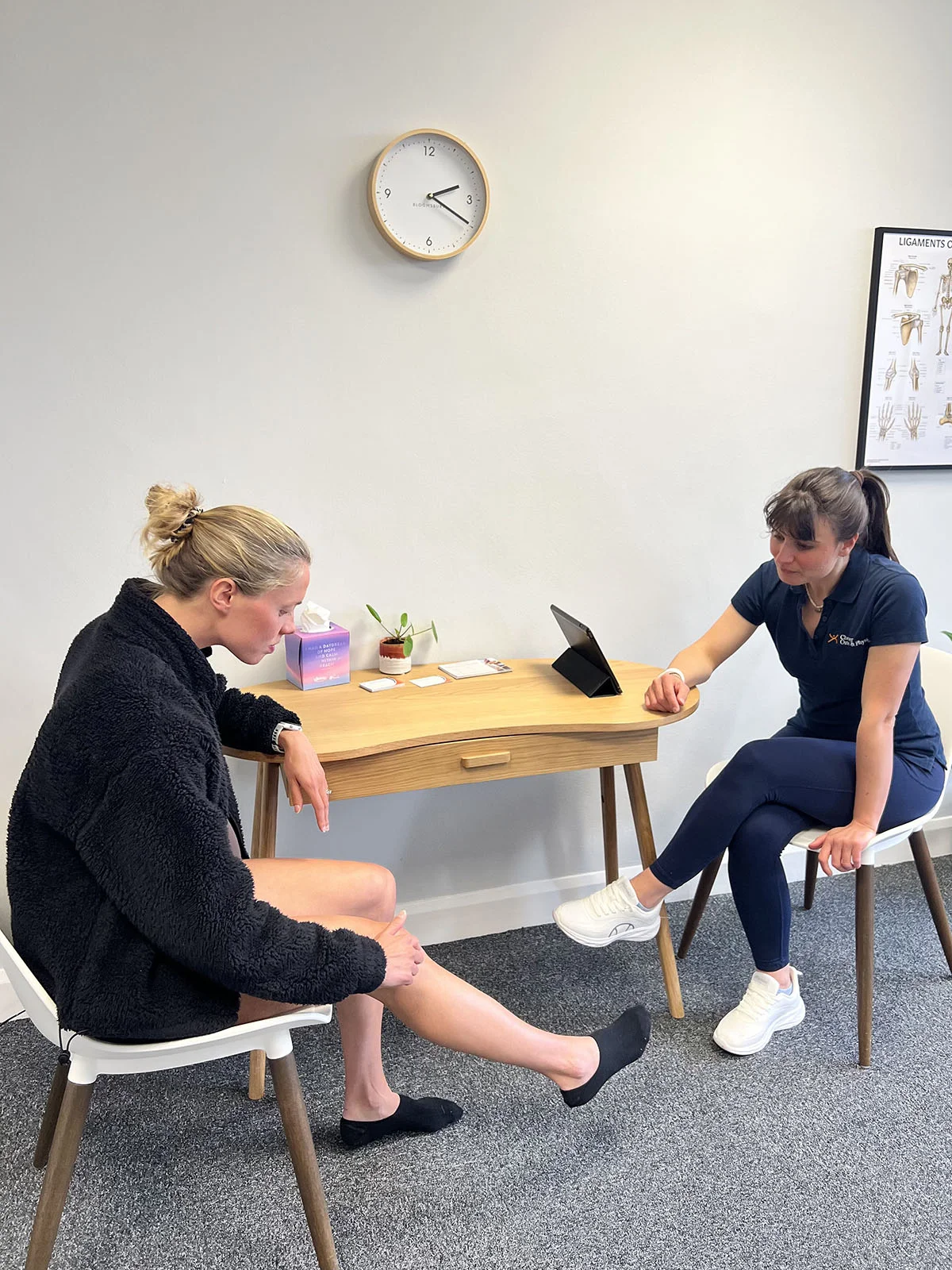
- Detailed Biomechanical Assessment
We begin by analysing your gait, foot posture, ankle mobility, and the alignment of your entire lower limb. This allows us to work out how influential anatomical factors may be in your presentation. - Hands-on Treatment
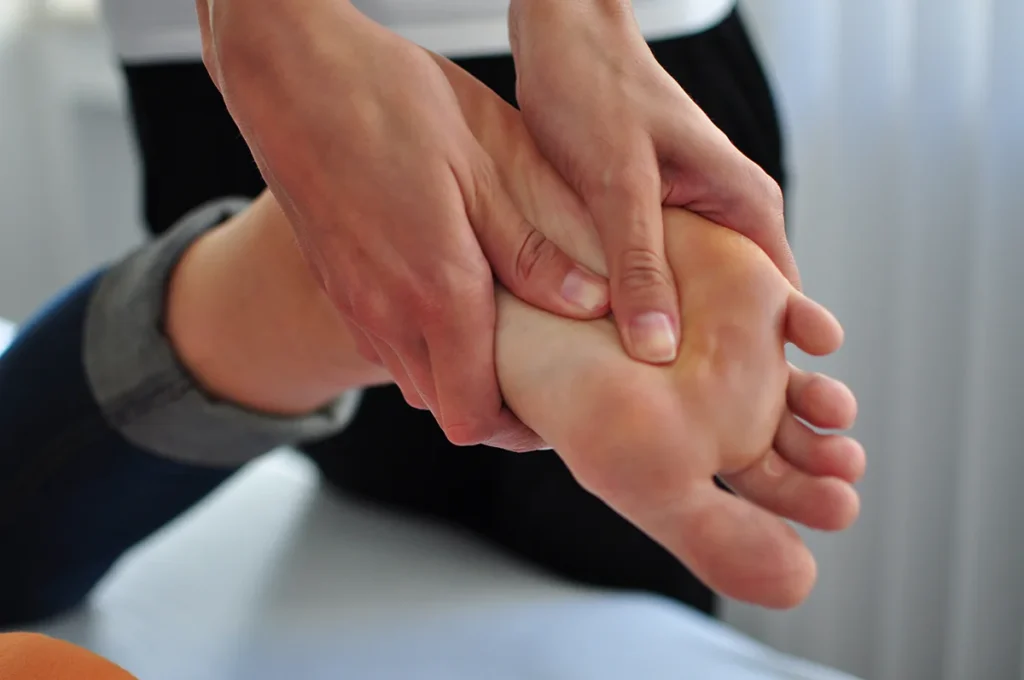
We use manual therapy techniques to relieve tension in the calf muscles, mobilise the ankle joints, and gently work on the tissue of the foot. - Targeted Loading & Strength Exercises
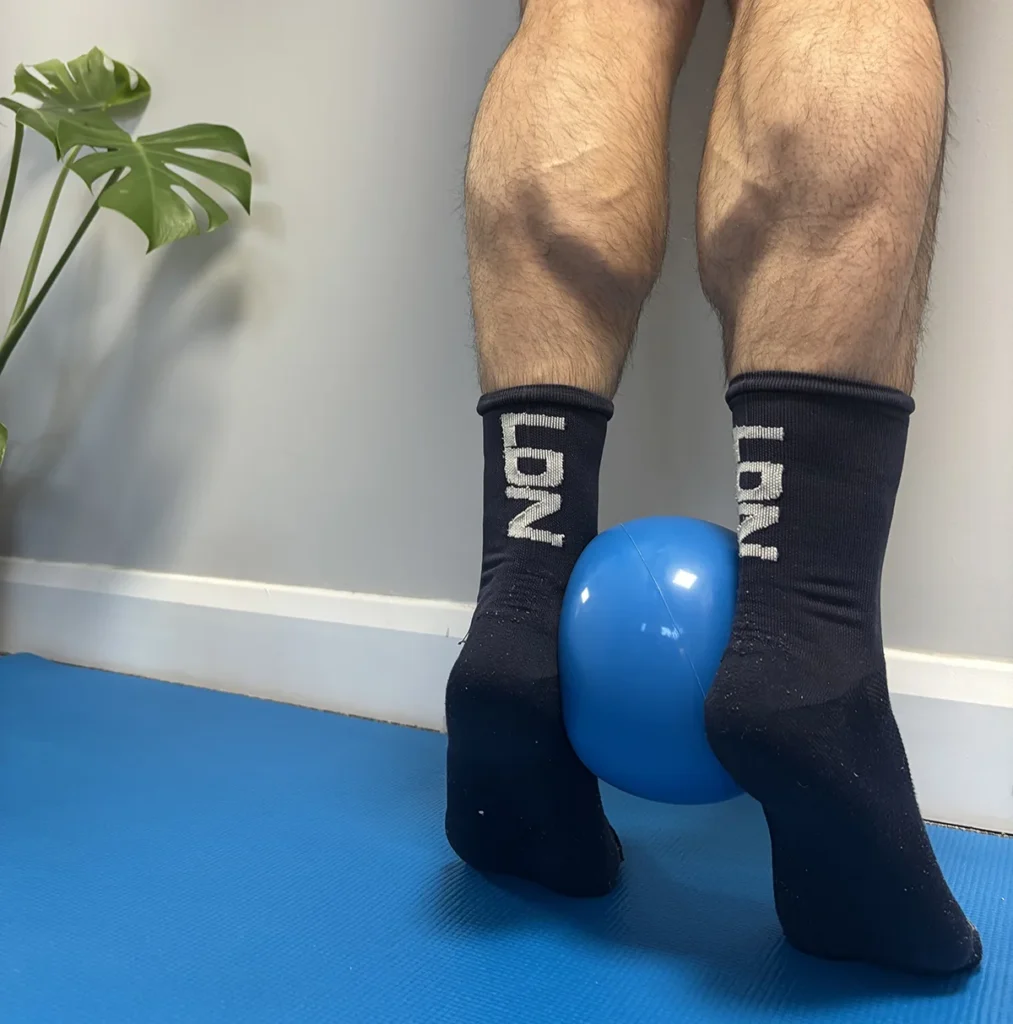
Passive care like rest and hands on treatment won’t cure plantar fasciitis long-term. We will guide you through progressive strengthening exercises for the foot intrinsic muscles and the calf-tendon complex. Controlled loading helps rebuild the structural integrity of the plantar fascia and prevent the reoccurence of pain. - Orthotics, & Lifestyle Advice
We can utilise taping techniques to provide instant mechanical relief to your arch during your daily activities. We also offer expert advice on off-the-shelf or custom orthotics, footwear choices, and load management.