Back Pain Treatment At Chester Osteo & Physio
Back pain can be worrying and debilitating, and with so many treatment options available, it’s often hard to know where to turn. Our approach is different. While we recognise the important role of the spinal structures such as the muscles, joints, discs, and nerves, we focus on the whole person, not just the pain. We take the time to understand how back pain is affecting you physically, but also how it impacts you emotionally, psychologically, and socially. This deeper understanding allows us to create a personalised treatment plan designed to achieve the best possible results for you.
What Causes Back Pain?
Muscle Strain
Overuse or injury to the muscles of the back can lead to pain and stiffness. Awkward lifting, unaccustomed heavy lifting, sudden movements, or prolonged sitting can all contribute to muscle strain.
Facet Joint Pain
The small joints in the spine (facet joints) can undergo age-related changes similar to other joints in the body. Osteoarthritis may cause the cartilage between vertebrae to change over time which can cause increased sensitivity to pain. These changes can also limit movement and cause stiffness in some individuals.
Lumbar Disc Herniation
he discs between the vertebrae act as cushions to absorb shock. These discs can reduce in height or herniate, sometimes causing pain. In some cases, a herniated disc may irritate nearby nerves, leading to pain that radiates into the legs, along with tingling, pins and needles, and numbness.
Nerve Irritation
Herniated discs or bone spurs in the spine can compress nerves branching out from the spinal cord. This can result in pain radiating into the buttocks or legs (commonly known as sciatica), as well as sensations of tingling or numbness.
Axial Spondyloarthritis
Axial spondyloarthritis is an inflammatory condition that mainly affects the spine and sacroiliac joints. It can cause stiffness and pain, particularly in the lower back, and symptoms often improve with exercise but worsen with rest.
Scoliosis
Scoliosis refers to an abnormal sideways curvature of the spine. While mild cases may cause little to no discomfort, more significant curvature can lead to muscle imbalance, uneven strain on spinal structures, and chronic back pain.
Spinal Fracture
Fractures in the vertebrae can occur due to trauma, such as a fall or accident, or as a result of weakened bones from conditions like osteoporosis. Spinal fractures can cause sudden, severe pain and may require urgent medical attention.
Injuries
Traumatic incidents such as falls, sports injuries, or car accidents can strain the muscles, ligaments, or joints of the back. In some cases, these injuries may also affect the spine itself, causing ongoing pain or stiffness.
Stress
Emotional stress and anxiety can increase muscle tension, particularly in the lower back, which may contribute to or worsen existing pain.
Spinal Stenosis
Narrowing of the spinal canal (spinal stenosis) can put pressure on the spinal cord or nerves, leading to pain, weakness, or numbness in the back and legs.
Infections
Although rare, infections such as osteomyelitis, discitis, or epidural abscess can affect the spinal structures and cause significant back pain.
Tumors
Spinal tumors, though uncommon, can develop in or near the spine and may lead to persistent back pain or neurological symptoms.
Cauda Equina Syndrome (CES)
This is a rare but serious condition where there’s pressure on the nerves at the end of the spinal cord. It can cause severe back pain, along with numbness and weakness in the legs, issues with bladder and bowel control and reduced sexual function. It is advisable to go to A&E if you feel you might have CES.
Questions,
Answered With Clarity
Do I need treatment?
Not all cases of neck pain require a physical treatment as symptoms typically resolve on their own with the correct self management strategies. It is beneficial to see us early into your flare of pain so we can rule out serious causes and provide you the tools to ease your pain and keep it away long term. Ignoring symptoms can lead to long term pain that persists due to adapted movement patterns and potential fear avoidance of pain provoking activities. We are highly skilled at assisting you to restore these movement patterns which are key to getting you back to your valued activities pain free.
How do we treat back pain?
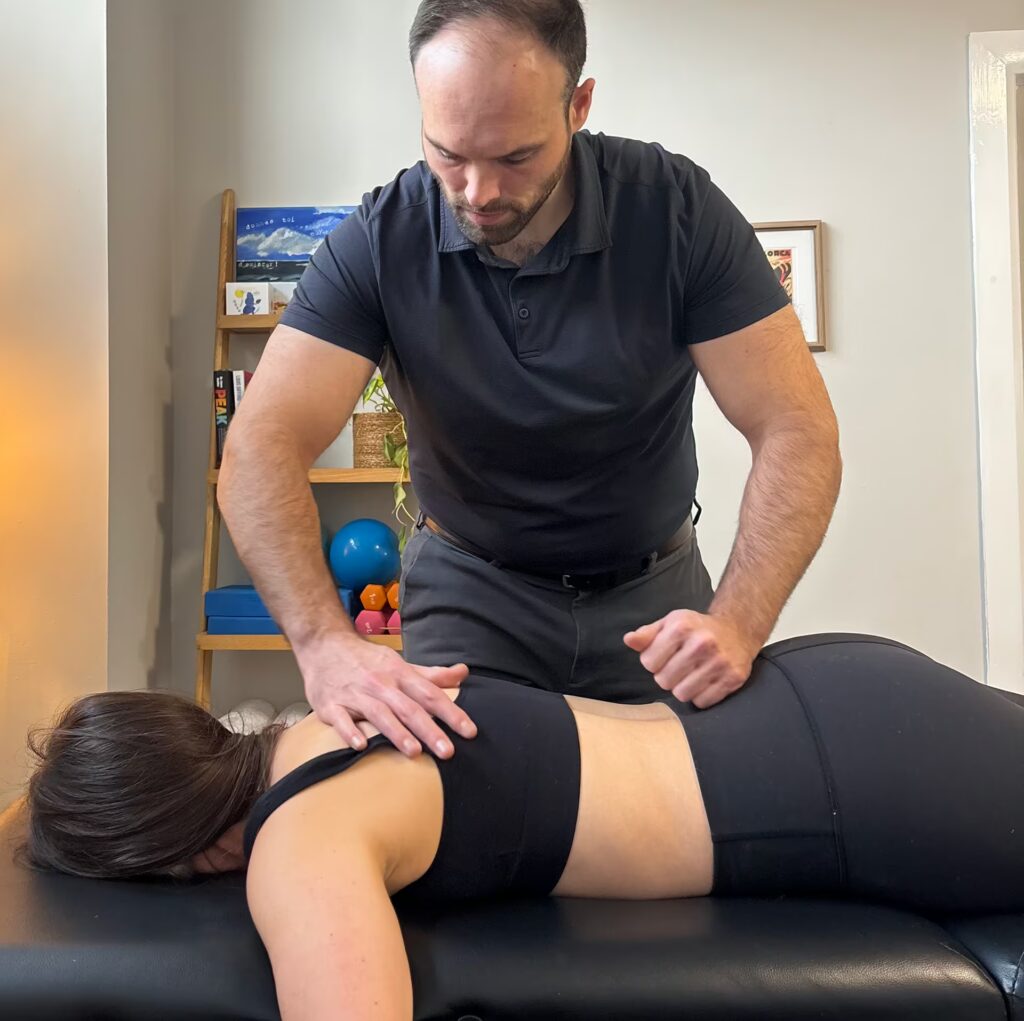
We use a person centred approach that explores the true root cause of your pain. This goes way beyond the structural causes and investigates the cognitive functional aspects of neck pain that often hold the key to a sustained recovery. We combine traditional approaches such as joint mobilisation and soft tissue work which can be effective in the short term, however our goal is to provide you the tools needed so you no longer need our services!
How long does treatment take?
This depends on your diagnosis, history of pain and complexity of your case. No two people are the same which makes it hard to give a concrete answer however we provide gold standard, evidence based care that aims to reduce treatment dependency and will be fully transparent from the initial consultation about your predicted trajectory.
Do I need a scan?
The majority of neck pain doesn’t require a scan as the expert clinical assessment provided by our team is sufficient to diagnose the problem. In the minority of cases when nerves don’t calm down and orthopedic interventions are considered, we are well placed to arrange scans and get you to the right provider. Scans are also warranted in the rare case of serious suspected conditions and we are able to write a clinical letter and organise the scan for you free of charge, usually on the same day.
Do I need surgery or injections?
Invasive options are the last resort for back pain and at Chester Osteo and Physio we strive to make sure you avoid it by providing robust conservative measures with a multimodal person centred approach. We have experience working in second opinion clinics in the NHS where many patients we treated were told they needed invasive options. Having a more holistic diagnosis and better understanding of their pain they were able to avoid it and reduce their pain without these riskier and costlier procedures.